|
|
|
|
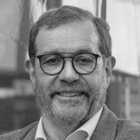
Alain Aspect
Université Paris-Saclay, France
Plenary Talk
A former student of ENS Cachan (now ENS Paris‑Saclay), Alain Aspect is a professor at the Institut d’Optique–Université Paris‑Saclay, an honorary professor at École Polytechnique, and an emeritus research director at CNRS. He is a member of the French Academy of Sciences, the Academy of Technologies, and numerous foreign scientific academies.
His work on fundamental quantum phenomena involving photons and atoms has earned him many awards in France and abroad, including the 2022 Nobel Prize in Physics for his “experiments with entangled photons, establishing the violation of Bell inequalities and paving the way for quantum information science.” After carrying out this research at the Institut d’Optique between 1975 and 1982, he joined Claude Cohen‑Tannoudji’s group at ENS Paris, exploring laser cooling of atoms (Nobel Prize 1997). In 1993, he created at the Institut d’Optique a research group active in the field of quantum atomic optics and neutral‑atom quantum simulators.
|
|
|
|
|
|
|
|
Kamal Choudhary
Johns Hopkins University, USA
Keynote – Workshop 4: AI for Quantum materials and Quantum Technologies
Kamal Choudhary is an assistant professor in the Department of Materials Science and Engineering, with a joint appointment in electrical and computer engineering. His research focuses on atomistic materials design using classical mechanics, quantum mechanics, and machine learning methods to accelerate experimental discovery. Choudhary served as a staff scientist at the National Institute of Standards and Technology (NIST). He is the creator of the widely used JARVIS (Joint Automated Repository for Various Integrated Simulations) infrastructure for materials design, hosted at NIST. He is also the developer of AtomGPT.org and ChatGPT Material Explorer, custom AI agents for materials science.
At AtomGPTLab, his work bridges theory, simulation, and artificial intelligence to advance the discovery and design of materials for applications in electronics, energy, and quantum technologies. His research interests include condensed matter physics, density functional theory, force fields, graph neural networks, large-language models and quantum computing algorithms. He has contributed to the computational discovery of materials such as 2D materials, solar absorbers, topological insulators, superconductors, thermoelectrics, metal-organic frameworks, and dielectrics.
|
|
|
|
|
|
|
|
Ignacio Cirac
Max Planck Institute of Quantum Optics, Germany
Plenary Talk
Ignacio Cirac graduated in Theoretical Physics at the Complutense University of Madrid (Spain) in 1988, and gained his PhD in 1991 at the same university. Between 1991 and 1996, he was Associate Professor at the University of Castilla-La Mancha (Spain), and spent eighteen months at the University of Colorado (US) working with Peter Zoller. From 1996 until 2001 he was Professor of Theoretical Physics at the University of Innsbruck (Austria). Since 2001 he is a member of the Max Planck Society and director at the Max Planck Institute of Quantum Optics (Garching, Germany). In 2002 he also became honorary professor at the Technical University of Munich.
His field of research is quantum information theory. With his collaborators, he introduced the first proposals of quantum computers, simulators, and repeaters with atoms, and developed a theory of tensor networks to describe quantum many-body systems.
|
|
|
|
|
|
|
|
Sandip De
BASF, Germany
Invited - Industrial Forum
Sandip De leads the Quantum Mechanical Simulation for Solid-State Materials & Inorganic Chemistry team at BASF SE in Ludwigshafen. His expertise spans heterogeneous catalysis, inorganic chemistry, atomistic materials modelling and machine‑learning approaches for materials discovery.
Originally from India, he completed his PhD at the University of Basel under Stefan Goedecker, followed by research positions at IBM Research India and EPFL in Michele Ceriotti’s group. He joined BASF in 2018, where he develops computational and data‑driven methods to accelerate materials innovation.
He is a highly cited researcher with influential contributions to quantum simulations, machine‑learning potentials and materials informatics.
|
|
|
|
|
|
|
|
Juan J. de Pablo
New York University, USA
Keynote – Plenary Session
Dr. Juan de Pablo is the University’s inaugural Executive Vice President for Global Science and Technology, and the Executive Dean of the NYU Tandon School of Engineering. He leads cross-University, multidisciplinary, and globally focused efforts to accelerate the momentum of NYU’s vast science and technology enterprise for the purposes of solving humanity’s largest challenges.
A prominent materials scientist and chemical engineer, de Pablo’s research focuses on polymers, biological macromolecules such as proteins and DNA, glasses, and liquid crystals. He is a leader in developing molecular models and advanced computational approaches to elucidate complex molecular processes over wide ranges of length and time scales. He has developed advanced algorithms to design and predict the structure and properties of complex fluids and solids at a molecular level, and has been a pioneer in the use of data-driven machine learning approaches for materials design.
|
|
|
|
|
|
|
|
Claudia Draxl
Humboldt-Universität zu Berlin, Germany
Plenary Talk
|
|
|
|
|
|
|
|
Ganna Gryn'ova
University of Birmingham, UK
Keynote – Workshop 2: AI for chemistry and energy materials (batteries, catalysis, photovoltaics)
Originally from Ukraine, Ganna (Anya) Gryn’ova received her BS and MSc in chemistry summa cum laude from Oles Honchar Dnipro National University. In 2014 she received a PhD in computational chemistry from Australian National University. Her doctoral thesis received the IUPAC-Solvay International Award for Young Chemists for one of the five most outstanding PhD theses in the general area of the chemical sciences worldwide. Anya continued her career as a postdoctoral researcher at École Polytechnique Fédérale de Lausanne, where in 2016 she won the Marie Skłodowska-Curie Actions individual fellowship.
In 2019, Dr. Gryn’ova started her independent scientific career leading the junior research group “Computational Carbon Chemistry” (CCC) at the Heidelberg Institute for Theoretical Studies (HITS gGmbH) and Interdisciplinary Center for Scientific Computing (IWR) at Heidelberg University, Germany. In 2021, Anya received the prestigious ERC Starting Grant for her project “PATTERNCHEM: Shape and Topology as Descriptors of Chemical and Physical Properties in Functional Organic Materials”; she also joined the Collaborative Research Centre SFB1249 “N-Heteropolycycles as Functional Materials” and the SIMPLAIX strategic research initiative on bridging scales from molecules to molecular materials by multiscale simulation and machine learning as a principal investigator.
In April 2024, Dr. Gryn’ova moved to UK and became an Associate Professor of Computational Chemistry at the University of Birmingham.
|
|
|
|
|
|
|
|
Kedar Hippalgaonkar
Nanyang Technological University, Singapore
Invited – Plenary Session
Asst. Prof. Kedar Hippalgaonkar is a joint appointee with the Materials Science and Engineering Department at Nanyang Technological University (NTU) and as a Senior Scientist at the Institute of Materials Research and Engineering (IMRE) at the Agency for Science Technology and Research (A*STAR). He is leading the Accelerated Materials Development for Manufacturing (AMDM) program from 2018-2023 focusing on the development of new materials, processes and optimization using Machine Learning, AI and high-throughput computations and experiments in electronic and plasmonic materials and polymers. He is also leading the Pharos Program on Hybrid (inorganic-organic) thermoelectrics for ambient applications from 2016-2020.
He has published over 50 research papers, and was nominated as a Journal of Materials Chemistry Emerging Investigator in 2019. He was recognized as a Science and Technology for Society Young Leader in Kyoto in 2015. For his outstanding graduate research, he was awarded the Materials Research Society Silver Medal in 2014. He graduated with a Bachelor of Science (Distinction) from the Department of Mechanical Engineering at Purdue University in 2003 and obtained his Doctor of Philosophy from the Department of Mechanical Engineering at UC Berkeley in 2014. While pursuing his doctoral studies, he conducted research on fundamentals of heat, charge and light in solid state materials.
|
|
|
|
|
|
|
|
Olexandr Isayev
Carnegie Mellon University, USA
Keynote – Workshop 3: AI for BioMatter: Designing Molecules, Materials, and Medicine
I am the Carl and Amy Jones Professor of Chemistry at Carnegie Mellon University. My research focuses on solving fundamental chemical problems through machine learning, molecular modeling, and quantum mechanics.
Since 2016, my work has pioneered research at the interface between ML and quantum chemistry, resulting in several families of atomistic machine learning potentials now used by leading laboratories and companies worldwide.
|
|
|
|
|
|
|
|
Heather J. Kulik
MIT, USA
Keynote – Plenary Session
Heather J. Kulik is a Professor of Chemical Engineering and Chemistry at MIT. She received her B.E. in Chemical Engineering from Cooper Union in 2004 and her Ph.D. in Materials Science and Engineering from MIT in 2009. She completed postdocs at Lawrence Livermore (2010) and Stanford (2010−2013), prior to returning to MIT as a faculty member in 2013 and receiving tenure in 2021. She was promoted to the rank of Full Professor in 2024.
Her work has been recognized by a Burroughs Wellcome Fund Career Award at the Scientific Interface (2012-2017), Office of Naval Research Young Investigator Award (2018), DARPA Young Faculty Award (2018), AAAS Marion Milligan Mason Award (2019-2020), NSF CAREER Award (2019), the ACS COMP Division OpenEye Award for Outstanding Junior Faculty in Computational Chemistry, the JPCB Lectureship (ACS PHYS), the DARPA Director’s Fellowship (2020), a Sloan Fellowship (2021), the AIChE CoMSEF Impact award (2023), a TUM Hans Fischer Senior Fellowship (2023), and a Presidential Early Career Award for Scientists and Engineers (2025).
|
|
|
|
|
|
|
|
Nicola Marzari
University of Cambridge, UK
Plenary Talk
Professor Marzari’s research is dedicated to the development and application of novel electronic-structure theories, algorithms, and software to understand, predict, and ultimately design the properties of complex materials and complex states of matter.
This field is now achieving its long sought holy grail: predictive accuracy, where first-principles, quantum mechanical simulations can accurately describe the behaviour of interacting electrons and ions; the ability to capture the complexity of the real world by bridging length and time scales and abstracting microscopic dynamics of particles and excitations into mesoscopic models; and the growing power of machine learning and artificial intelligence, which are rapidly reshaping our approaches to scientific discovery and understanding.
Prof Marzari holds the prestigious Cavendish Professor of Physics chair. Established in 1871, this historic chair has played a central role in the leadership and direction of the Laboratory for over 150 years.
The Cavendish Professorship has been held by some of the most influential figures in the history of physics who, between them, changed completely our understanding of the physical world. Previous Cavendish Professors included James Clerk Maxwell, J J Thomson, Ernest Rutherford, and Nevill Mott.
|
|
|
|
|
|
|
|
Shyue Ping Ong
NUS, Singapore
Keynote – Workshop 1: Foundation and universal interatomic potentials
Prof Shyue Ping Ong is a Provost's Chair Professor in Materials Science and Engineering at the National University of Singapore. He is widely recognized as one of the pioneers of foundation potentials, i.e., machine learning models with comprehensive coverage of the periodic table, with broad applications in materials discovery and design. Prof Ong is also the founder and lead developer of pymatgen, one of the most popular open-source libraries for materials analysis, and a core contributor to the Materials Project, a public platform that provides computed properties of all known materials. He has authored more than 170 peer-reviewed articles and has been recognized as a Clarivate Highly Cited Researcher since 2021. He was also a recipient of the prestigious US Department of Energy Early Career Research Program, the US Office of Naval Research Young Investigator Program and the Returning Singaporean Scientist Scheme awards.
|
|
|
|
|
|
|
|
Leopold Talirz
Schott AG, Germany
Invited - Industrial Forum
I am a computational physicist looking for opportunities to change the world through better materials, science and technology. I love programming and working on materials challenges together with experimentalists & engineers.
Originally from Berlin, I studied physics at ETH Zurich and then spent a decade working as a computational materials scientist in academia, solving nature’s riddles through atomistic simulations and writing software to make materials science more open, reproducible, and accessible with AiiDA and the Materials Cloud. In 2021 I joined Microsoft's Azure Quantum Team to build Azure Quantum Elements, a cloud platform for supercharging atomistic simulations through high-performance computing, machine learning, and, eventually, quantum computing. Since March 2024, I am with Schott AG, a specialty glass manufacturer, in a dual role as expert for materials informatics and head of the computational materials engineering group.
|
|
|
|
|
|
|
|
Alexandre Tkatchenko
University of Luxembourg, Luxembourg
Keynote – Plenary Session
Alexandre Tkatchenko is a Professor of Theoretical Condensed Matter Physics at the University of Luxembourg. He is also Head of the Department of Physics and Materials Science and Head of the Theoretical Chemical Physics group.
|
|
|
|
|
|
|
|
Julija Zavadlav
Technical University of Munich, Germany
Keynote – Workshop 3: AI for BioMatter: Designing Molecules, Materials, and Medicine
The research area of Prof. Zavadlav (b. 1987) lies in the development of efficient and predictive computational methods and models for application areas ranging from life sciences to engineering. To this end, she is integrating traditional physics-based approaches with emerging machine learning techniques and Bayesian modeling and developing novel concurrent multi-resolution simulation techniques.
Prof. Zavadlav studied physics at the University of Ljubljana where she received her Ph.D. in 2015 while working at the National Institute of Chemistry in Slovenia. In 2016, she joined the Computational Science and Engineering Laboratory at ETH Zurich and was awarded the ETH Postdoctoral Fellowship. In 2019, she was appointed as Assistant Professor for Multiscale Modeling of Fluid Materials at TUM. She was awarded with the ERC Starting Grant in 2022.
|
|
|
|
|
|
|
|
Claudio Zeni
Microsoft Research, UK
Invited - Industrial Forum
Claudio Zeni is a Senior Researcher at Microsoft Research Cambridge – AI for Science, working on machine learning for the simulation and discovery of materials, with a particular focus on generative models and data-driven approaches for materials design.
He holds a PhD in Computational Physics from King’s College London, where his research focused on machine learning methods for modelling materials at the atomistic scale. Prior to joining Microsoft Research, Claudio held a postdoctoral position where he worked on computational physics, data science, and machine learning.
|
|
|
|
|
| |
|
|